Tinubu, Atiku, Obi: Six Battlegrounds That Could Decide Nigeria’s 2027 Presidential Election
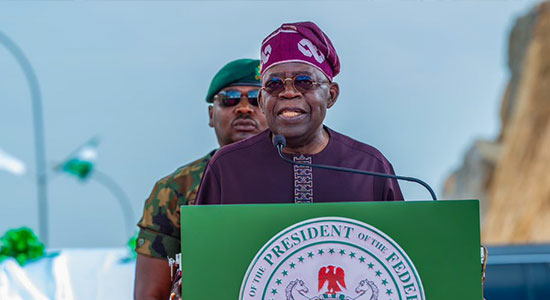
Nigeria’s 2027 presidential election could be decided by regional voting patterns, voter turnout, opposition unity and the ability of political parties to convert their strongholds into nationwide electoral support.
President Bola Ahmed Tinubu of the All Progressives Congress (APC) is seeking re-election, while former Vice President Atiku Abubakar is contesting under the African Democratic Congress (ADC). Former Anambra State Governor Peter Obi is also in the race under the Nigeria Democratic Congress (NDC).
With the Independent National Electoral Commission (INEC) listing 18 presidential candidates for the January 16, 2027 election, the contest is expected to test the strength of political alliances formed since 2023 and the ability of candidates to expand their support beyond traditional bases.
The central question is whether the political realignments since the last presidential election will significantly change voter behaviour or merely reshape the structures competing for votes.
INEC Chairman, Professor Joash Amupitan, recently disclosed that the national register of voters had risen to 103 million, highlighting the enormous electoral stakes.
Lagos leads the country with 7,488,633 registered voters, followed by Kano with 6,570,276 and Kaduna with 4,662,640. Katsina, Rivers, Oyo, Delta, Benue, Ogun and Bauchi complete the top 10 states by voter population.
The figures underscore the importance of mobilising voters in populous states, particularly as the election approaches.
2023: The Electoral Benchmark
INEC recorded 93,469,008 registered voters for the 2023 presidential election, but only 24,025,940 valid votes were cast nationwide.
Tinubu emerged victorious with 8,794,726 votes, ahead of Atiku, who polled 6,984,520, and Obi, who secured 6,101,533.
The outcome demonstrated that electoral victory depends not only on regional popularity but also on voter turnout, political organisation, vote distribution and the margins separating candidates in crucial states.
Those factors are expected to remain central to the 2027 contest, particularly as opposition parties attempt to challenge the incumbent's nationwide political network.
North-West: The Biggest Electoral Prize
The North-West remains Nigeria's largest geopolitical voting bloc, making it one of the most important battlegrounds in the presidential race.
In 2023, Tinubu secured 2,652,235 votes in the zone, narrowly ahead of Atiku's 2,329,540. Rabiu Kwankwaso polled 1,268,250, while Obi received 350,182.
The figures demonstrated how the division of opposition votes helped shape the regional outcome.
The political landscape has since changed, with Atiku contesting under the ADC and Obi seeking the presidency on the NDC platform. The extent to which opposition candidates can consolidate their support will be crucial to their prospects.
Kano, which recorded more than 5.9 million registered voters in 2023, will be particularly significant because of its population and political influence.
NDC National Publicity Secretary, Osa Director, said the party intended to retain its traditional strongholds in the South-East, South-South and Lagos while making inroads into the North-East and North-West.
He expressed confidence that the party's growing northern engagement would strengthen its chances.
Director also argued that Kwankwaso's presence on the NDC ticket alongside Obi would improve the party's electoral prospects in the North.
The zone will therefore test whether opposition forces can translate political alliances into a concentrated voting bloc capable of challenging the APC.
North-East: Atiku's Test of Strength
The North-East was Atiku's strongest geopolitical zone in the 2023 election.
He secured 1,737,846 votes, compared with Tinubu's 1,185,458. Obi polled 315,107, while Kwankwaso received 126,343.
The region remains important to Atiku's electoral calculations, although Tinubu benefits from the APC's political structures and the presence of Vice President Kashim Shettima, a former Borno State governor.
For the ADC candidate, retaining his previous advantage will be essential. For Tinubu, narrowing the gap could significantly improve his national vote tally.
However, winning the region alone may not guarantee Atiku victory. His prospects will also depend on how well the ADC performs in the North-West, North-Central and southern states.
North-Central: A Crucial Swing Region
The North-Central, including the Federal Capital Territory, is another zone that could shape the presidential outcome.
Tinubu won the region in 2023 with 1,760,993 votes, while Obi secured 1,415,577 and Atiku polled 1,162,087.
The region's strategic position between the northern and southern voting blocs makes it particularly important in a closely contested election.
Obi's victory in the FCT in 2023 demonstrated that candidates could attract substantial support outside their traditional regional bases.
Changes in party affiliations, political alliances and the influence of state governors could affect the region's voting pattern in 2027.
The North-Central may consequently provide one of the clearest indications of whether opposition realignments have translated into wider electoral support.
South-West: Can Tinubu Protect His Advantage?
The South-West remains Tinubu's principal political stronghold and one of the regions where his performance could determine the scale of his re-election victory.
In 2023, he secured 2,279,407 votes across the zone, compared with Atiku's 941,941 and Obi's 846,478. He won five of the six states, although Lagos went to Obi.
The challenge for the opposition may not necessarily be to capture the entire region but to reduce Tinubu's margins in key states.
Even without a complete shift in regional allegiance, smaller margins in populous states could affect the national electoral calculation.
For Tinubu, maintaining his dominance will be important. For his challengers, making significant inroads into the president's home region could prove decisive in a competitive race.
South-East: Obi's Stronghold Under Pressure
Obi won all five South-East states in 2023, recording 1,952,998 votes across the zone.
The region remains a critical part of his electoral base, but the challenge ahead is whether he can retain that support while rebuilding the wider coalition that propelled his candidacy in 2023.
His move to the NDC, while Atiku leads the ADC, introduces a new dimension to the opposition contest.
The South-East's voting pattern will therefore be important, but Obi's national prospects will depend on his ability to attract support from other regions, particularly among young voters and urban populations.
South-South: Political Structures Versus Voter Choice
The South-South produced one of Obi's strongest performances in 2023, with the former Anambra governor securing 1,210,675 votes. Tinubu received 799,957, while Atiku polled 717,908.
Since then, the region's political landscape has shifted, with the APC strengthening its presence in parts of the zone and the ADC seeking to benefit from Atiku's choice of former Rivers State governor Rotimi Amaechi as his running mate.
Rivers is expected to be a particularly significant battleground because of the political influence associated with Amaechi and former governor Nyesom Wike.
Tinubu won Rivers in 2023 with 231,591 votes, ahead of Obi's 175,071 and Atiku's 88,468.
However, the contest extends beyond Rivers. Delta, Edo, Akwa Ibom, Bayelsa and Cross River could also influence the regional balance.
Delta is particularly noteworthy because Obi secured 341,866 votes there in 2023, compared with Tinubu's 90,183.
The region could therefore become a test of whether the growing influence of political parties and state-level structures will translate into votes at the presidential level.
Rafsanjani Warns Against Assuming South-South Victory
Executive Director of the Civil Society Legislative Advocacy Centre (CISLAC), Comrade Auwal Musa Rafsanjani, has cautioned political parties against assuming that the South-South belongs automatically to either the opposition or the APC.
He argued that control of state governments does not necessarily translate into control of voters, stressing that electoral outcomes ultimately depend on citizens' choices.
“Control of state governments must not be confused with control of voters,” he said.
Rafsanjani identified Rivers, Edo and Delta as important tests of whether political structures can deliver presidential votes.
He also highlighted the importance of young and first-time voters, economically distressed citizens, urban and educated voters, rural communities, undecided voters, women and citizens who did not participate in previous elections.
His assessment suggests that parties will need to look beyond elite alliances and political endorsements to understand the factors likely to influence voting decisions.
Women and Voter Turnout Could Make the Difference
Executive Director of the Women’s Inclusion, Empowerment and Leadership Development Initiative, Okeke Amarachi Evangel, also warned against treating the South-South as an automatic opposition stronghold or assuming that the APC has already consolidated its position in the region.
She said the political landscape had changed since 2023, making the forthcoming election more competitive.
Evangel identified Rivers, Delta, Akwa Ibom, Edo, Bayelsa and Cross River as states to watch, noting that the eventual outcome would depend on voter participation, candidate appeal, party unity and the issues affecting citizens.
Women and young people could play an important role in determining the result, particularly if parties succeed in mobilising voters who were previously disengaged from the electoral process.
The Decisive Factors
Ultimately, the 2027 presidential election may be determined by a combination of factors rather than the dominance of any single region.
Tinubu's challenge will be to defend his established political base, preserve the APC's organisational advantage and prevent opposition candidates from making substantial gains in critical states.
Atiku will need to maintain his strength in the North-East, improve his performance elsewhere and demonstrate that the ADC can mobilise a broad national coalition.
Obi, meanwhile, faces the task of retaining his South-East support while expanding his reach across the North and the southern regions beyond his traditional base.
The ability of opposition parties to avoid splitting votes, the turnout of registered voters and the margins recorded in populous states could prove decisive.
With 103 million registered voters reported by INEC, the central question is not simply which candidate commands the strongest regional following, but who can convert that support into the broadest and most effective nationwide electoral coalition.
The battle for 2027 will ultimately be decided at the ballot box, where political calculations, party structures and campaign promises will be tested against the choices of Nigerian voters.


![Mass Defection Hit Akoko-Edo APC As Top Leaders, Notable Supporters Dump Party After Reps Primary [SEE PHOTOS]](/storage/281/467303.jpg)