Edo State Govt Launches Technology-Facilitated GBV Policy, Inaugurates Implementation Subcommittee
By Gloria Osemudiamhen
Public Relations Officer, Office of the First Lady, Edo State
The Edo State Government has launched the Technology-Facilitated Gender-Based Violence (TF-GBV) Policy 2026 and inaugurated an Implementation Subcommittee to drive its implementation, strengthen survivor support and combat emerging forms of abuse in digital spaces across the State.
The policy was officially unveiled at an event organised by the Edo State Ministry of Women Affairs and Social Development in collaboration with the Rule of Law and Anti-Corruption (RoLAC) Programme at the New Festival Hall, Government House, Benin City.
According to the Coordinator, Office of the Edo State First Lady, Mrs. Edesili Okpebholo Anani, the policy targets technology-enabled forms of gender-based violence (GBV), including cyberstalking, online harassment, sextortion and non-consensual sharing of intimate images. It prioritises public digital literacy, accessible reporting mechanisms for survivors, strengthened investigative and prosecutorial capacity, coordinated action among government institutions and collaboration with technology platforms to protect women, girls and other vulnerable groups.
Mrs. Anani, while stressing the importance of making the policy accessible to the public, noted that an executive summary would help citizens better understand its provisions and how they can seek support when affected by technology-facilitated GBV.
The Coordinator advocated the inclusion of young people, particularly members of Generation Z, in the implementation process, noting that their experiences and understanding of digital spaces could contribute valuable perspectives to the effective implementation of the policy.
Presenting the policy, the Commissioner for Women Affairs and Social Development, Hon. Eugenia Abdallah, explained that the document was developed to address emerging forms of abuse facilitated by technology. She identified increased public awareness, improved reporting of TF-GBV cases, stronger survivor support services and enhanced institutional capacity as key expected outcomes of the policy.
The Commissioner stressed that the launch marked the beginning of the implementation process rather than its conclusion, urging government institutions, civil society organisations, development partners, technology stakeholders and communities to take ownership of the policy.
In her goodwill message, a former Deputy Speaker and current member of the Edo State House of Assembly, Rt. Hon. Maria Edeko, described the policy as innovative and timely, commending the Ministry and other stakeholders for their efforts towards addressing technology-facilitated violence. She pledged the support of the House of Assembly for the process of translating the policy into law, which she said would provide a stronger legal framework for mandatory compliance and enforcement.
The Commissioner of Police, Edo State Command, CP Patrick Daaor, pledged the support of the Police Command towards the implementation and enforcement of the policy. He disclosed that the Police receive daily reports involving online bullying, blackmail and stalking, stressing the need for a clear and structured framework through which victims could seek redress.
CP Daaor expressed optimism that the enactment of the policy into law would strengthen institutional responses and provide clearer pathways for addressing technology-facilitated GBV.
The highlight of the event was the official unveiling of the Edo State TF-GBV Policy 2026, marking a significant step by the State towards strengthening protection, prevention, reporting and response mechanisms for technology-enabled violence.
Photo Caption
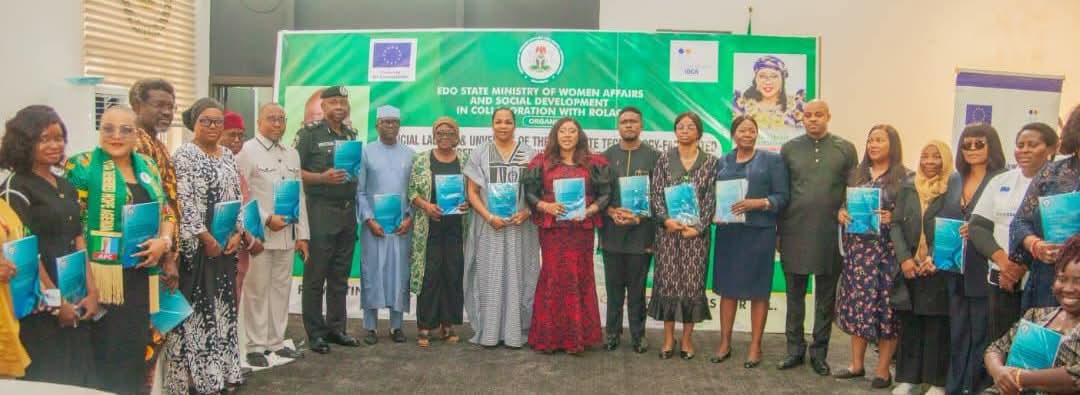
A group photograph of the Coordinator, Office of the First Lady, Mrs. Edesili Okpebholo Anani (middle); Commissioner for Women Affairs and Social Development, Hon. Eugenia Abdallah amongst Stakeholders with copies of the Technology Facilated Gender-Based Policy during its official unveiling, organized by the Ministry of Women Affairs and Social Development in collaboration with the Rule of Law Anti-Corruption (RoLAC) Programme, held at the New Festival Hall, Government House in Benin City.
Public Relations Officer, Office of the First Lady, Edo State
The Edo State Government has launched the Technology-Facilitated Gender-Based Violence (TF-GBV) Policy 2026 and inaugurated an Implementation Subcommittee to drive its implementation, strengthen survivor support and combat emerging forms of abuse in digital spaces across the State.
The policy was officially unveiled at an event organised by the Edo State Ministry of Women Affairs and Social Development in collaboration with the Rule of Law and Anti-Corruption (RoLAC) Programme at the New Festival Hall, Government House, Benin City.
According to the Coordinator, Office of the Edo State First Lady, Mrs. Edesili Okpebholo Anani, the policy targets technology-enabled forms of gender-based violence (GBV), including cyberstalking, online harassment, sextortion and non-consensual sharing of intimate images. It prioritises public digital literacy, accessible reporting mechanisms for survivors, strengthened investigative and prosecutorial capacity, coordinated action among government institutions and collaboration with technology platforms to protect women, girls and other vulnerable groups.
Mrs. Anani, while stressing the importance of making the policy accessible to the public, noted that an executive summary would help citizens better understand its provisions and how they can seek support when affected by technology-facilitated GBV.
The Coordinator advocated the inclusion of young people, particularly members of Generation Z, in the implementation process, noting that their experiences and understanding of digital spaces could contribute valuable perspectives to the effective implementation of the policy.
Presenting the policy, the Commissioner for Women Affairs and Social Development, Hon. Eugenia Abdallah, explained that the document was developed to address emerging forms of abuse facilitated by technology. She identified increased public awareness, improved reporting of TF-GBV cases, stronger survivor support services and enhanced institutional capacity as key expected outcomes of the policy.
The Commissioner stressed that the launch marked the beginning of the implementation process rather than its conclusion, urging government institutions, civil society organisations, development partners, technology stakeholders and communities to take ownership of the policy.
In her goodwill message, a former Deputy Speaker and current member of the Edo State House of Assembly, Rt. Hon. Maria Edeko, described the policy as innovative and timely, commending the Ministry and other stakeholders for their efforts towards addressing technology-facilitated violence. She pledged the support of the House of Assembly for the process of translating the policy into law, which she said would provide a stronger legal framework for mandatory compliance and enforcement.
The Commissioner of Police, Edo State Command, CP Patrick Daaor, pledged the support of the Police Command towards the implementation and enforcement of the policy. He disclosed that the Police receive daily reports involving online bullying, blackmail and stalking, stressing the need for a clear and structured framework through which victims could seek redress.
CP Daaor expressed optimism that the enactment of the policy into law would strengthen institutional responses and provide clearer pathways for addressing technology-facilitated GBV.
The highlight of the event was the official unveiling of the Edo State TF-GBV Policy 2026, marking a significant step by the State towards strengthening protection, prevention, reporting and response mechanisms for technology-enabled violence.
Photo Caption
A group photograph of the Coordinator, Office of the First Lady, Mrs. Edesili Okpebholo Anani (middle); Commissioner for Women Affairs and Social Development, Hon. Eugenia Abdallah amongst Stakeholders with copies of the Technology Facilated Gender-Based Policy during its official unveiling, organized by the Ministry of Women Affairs and Social Development in collaboration with the Rule of Law Anti-Corruption (RoLAC) Programme, held at the New Festival Hall, Government House in Benin City.